)
)
)
Alex Brundle at Race Retro: A Life in Fast Lanes, Fog Banks and Ferrari V12s
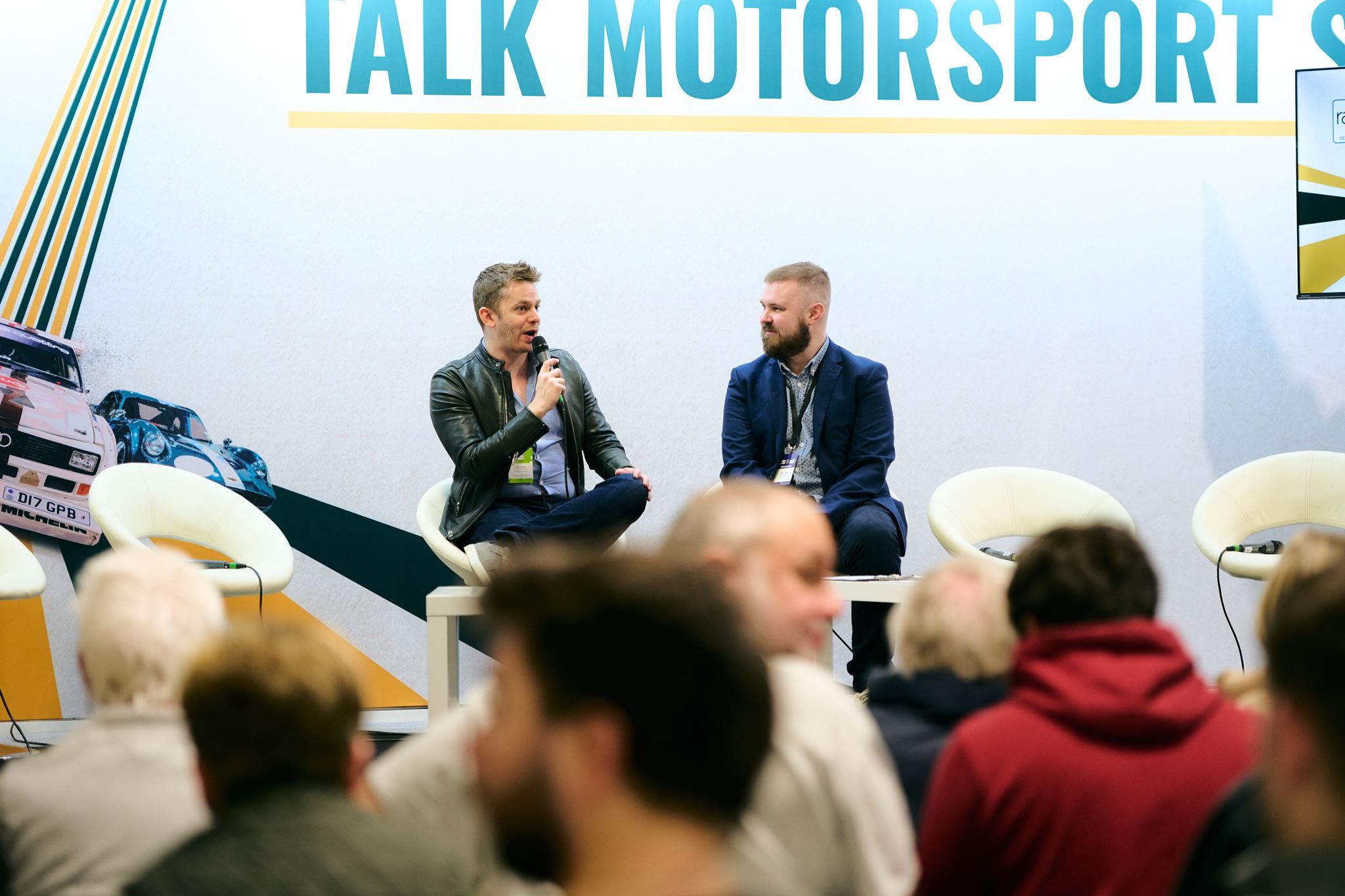
Who is Alex Brundle?
He’s 35, has “some broken bits,” a decade in prototypes, a deep love of historic racing, and now spends a good chunk of his time explaining other people’s speed to the world on F1 TV and Formula 2 commentary. Oh, and he’s rebuilding a Toyota Celica liftback GT that three generations of Brundles have raced.
Not a bad CV for someone who claims his career “never really started, it just never really stopped.”
Early Season Chaos and the Charm of Race RetroBrundle arrives at Race Retro straight out of what he calls a “flat out early season” in Formula One. Some operational personnel, he notes, had a grand total of seven days between the end of last season and the beginning of this one. Seven days. Not enough time to recover from Christmas, never mind a world championship.
Despite that, he’s positively glowing about Race Retro:
- He loves the atmosphere – friendly, buzzing, full of familiar faces from the historic racing circuit.
- He jokes that you could turn up here with no licence, no medical, no helmet, no overalls, no car, and still be racing by Monday morning.
- You can get your medical, your gear, and, from the sound of it, probably a car if you look in the right direction for more than 30 seconds.
Race Retro, in his view, is motorsport’s version of a one-stop shop: turn up as a civilian, leave as a racing driver.
“It Never Really Started, It Just Never Really Stopped”Brundle traces his racing origin story not to a lightning-bolt moment, but to relentless nagging:
He “used to craze” his parents to go karting.
There was, he says, an “obvious direction” in his life: motor racing. He can’t even imagine being the child who looks at a race car and says, “I don’t want to do that.” Given the chance to go racing at a very early age, he simply took every opportunity and never said no.
The result? At 35, he’s accumulated:
- An “extremely fun career” in motorsport
- A few “broken bits”
- And absolutely no sense that this was ever going to go any other way
Brundle’s original plan was very clear:
“I was going to Formula One, for sure. I was going to formula…”
He loved single-seater racing, and particularly MSV Formula 2. Those cars, he recalls, were:
- “Outstanding bits of machinery”
- “Fabulous cars”
- Still used today for the BRDC Young Driver of the Year Award
Technically, they were:
- Roughly 600kg
- With a four-cylinder turbo
- Described as having a similar power curve to current Formula One cars
- But crucially, without any of the electrification
He calls them “a little Audi engine with a lot of turbo boost” – and admits that one of the tragedies of junior single-seaters is that the best, most responsive, most powerful machinery you ever drive often comes when you’re too young to appreciate it.
Years later, standing in a heavier GT car, he catches himself thinking:
“A four cylinder turbo, 600 kilo Formula Two car would be lovely about now.”
You get the sense he’s only half joking.
Why Some of the Best Racing Happens in the Slowest CarsFor all the talk of turbocharged monsters, Brundle’s personal favourite sits well away from the headline horsepower figures:
If forced to keep only one of his historic cars, he’d keep his Swiftune-spec Mini Cooper S.
He describes it like this:
- The brake pedal is “pretty much redundant”
- It slips over the rear axle and you skid it to a stop if you want to stop
- It’s “like a roller skate with windows”
- It requires enormous bravery to hustle around a circuit
Some of his best racing has been in the most unassuming machinery, and he’s very clear on why:
“When you don’t have the power to get you out of trouble, you have to make the difference behind the wheel.”
That same ethos shows up in Clio Cup Europe, which Speaker 2 recalls from commentary duties:
- Around 160 horsepower
- 50 cars at Monza in the rain
- Immense slipstreaming
- GT drivers with “immense respect” for Clio drivers because they have to wrestle every last ounce out of the car
Fast is good. But having to be good is better.
The Switch from Single-Seaters to PrototypesThe turning point in Brundle’s career wasn’t a lack of pace, but a collision between ambition and finance:
“Racing is a career of opportunity.”
His path was heavily influenced by his father’s philosophy. Martin Brundle’s route, as Alex tells it:
- Started in a banger at 12, “looking through the steering wheel”
- Then National Hot Rods
- Eventually, in those days, you could go from that to Formula One
So the rulebook in the Brundle household was simple:
- You drive what anybody offers you
- You take the opportunities in front of you
- You do your best
- Wherever that leads is “where you end up”
For Alex, commercial realities in single-seaters made sports car racing the better option. Unlike those who were strictly “F1 or bust”, he:
- “Just liked race cars”
- Wanted first and foremost to be a racing driver of any sort
His earliest core memory of a race circuit?
- Early 2000s
- Le Mans 24 Hours
- The Toyota GT-One program
When single-seaters stopped being viable, he tried everything:
- Tested Giovanardi’s touring car for Triple Eight – the Vectra, with what he calls “one of the strangest front bumpers you’ve ever seen”
- Did his mandatory 10 laps at Le Mans in a prototype for Greaves Motorsport
- Ended up P1 in the session after those 10 laps (with the caveat that he got a fresh set of tyres on lap five – “cheating a bit,” in his words)
From there, he “ended up driving prototypes” and made that work for around 10 years, either, as he puts it with a grin, by:
“Conning them or doing a reasonably good job.”
The Nürburgring 24 Hours: When the Track Is the StarYou’d assume that with all his prototype mileage, Le Mans would automatically be his favourite endurance race. He loves it, calls it “amazing”, and notes that it’s now essentially:
“Formula One for a long time with a roof on it, more or less.”
But his favourite? That honour goes elsewhere:
The Nürburgring 24 Hours on the Nordschleife.
He calls it “the most extreme experience in circuit racing” on a paved track that starts and ends in the same place. The details he gives are enough to make most people reach for a seatbelt just reading them:
- No lights around most of the circuit
- Parts where you double back and get headlights from other cars full in your face
- You’re in a GT car, on incredibly bumpy tarmac
- Airborne three times a lap
- Driving three hours at a time
- Refuelling from road fuel pumps in the pit lane
- Every four laps, you might encounter a Renault Twingo in the way in your GT3 or GT4
He drove there for Aston Martin in a works GT4 and sums up the dynamic very simply:
“The track is the star.”
“There’s no room for hair gel in the paddock at the Nürburgring 24 hours.”
If you want to be the star of the show, he says, you’ve already lost to the racetrack. The whole thing is so challenging and technical that it humbles you, and he clearly values that.
The only thing he’s ever seen stop it? Fog.
And, as he notes, that happens a lot.
One particularly long fog stoppage also provided one of the great relationship-level reality checks:
- Before the race, he told his girlfriend they “don’t stop it for anything”
- Ten fog-soaked hours and a red flag later, she’s in the garage, wrapped in coat, hat and gloves
- She repeats his bravado back to him: “They don’t stop it for anything…?”
- He’s left with what he calls “humble pie” – delivered by both the track and the girlfriend
When asked the inevitable question – what’s your favourite car you’ve driven? – Brundle has plenty to choose from, but one stands so far above the rest that he can pick it instantly:
The Ferrari 512 M he drove at the Silverstone Festival a couple of years back.
If you’ve seen Steve McQueen’s film Le Mans, you already know its on-screen rival:
- McQueen drives a Porsche 917
- Brundle’s beloved car is “the other one” – the Ferrari it races head-to-head
His description of the car is gloriously physical:
- It’s a V12, not a flat-12
- It’s so loud that in the garage, when they fire it up, you can’t stand there without ear protection
- The sound literally drives you out of any enclosed space it’s in
- He wore two sets of earplugs plus helmet ear muffs just to drive it
On track:
- It’s a prototype with a sharp front end
- Like a Lola T70 that’s been on a diet and found extra torque
- It’s properly quick – quicker than GT4 pace and into the territory of what amateurs have been doing in GT3 in British GT, despite being from the 1970s
But the terror factor isn’t only about speed. It’s mechanical:
The gearbox has gates at both ends – so you can have it “in third” at one end of the linkage and not in third at the other.
When the engine you’re dealing with is a 1970s Ferrari V12 prototype unit, he notes, it doesn’t take a genius to realise:
- It is not cheap
- And you really, really don’t want to get that wrong
The combination is intoxicating to him:
“So visceral and unbelievably challenging to drive while still being quick at the same time.”
He also uses it to explain why, back in the day, drivers often peaked later in life:
- Cars like this, and older machines like 1950s sports cars and D-types, need huge experience
- They’re less physical than modern stuff in some ways, but require enormous knowledge, feel and laps
- You don’t get many laps – you don’t want to wear them out or break them – so it takes years to really understand them
- That’s part of why someone like Fangio was winning races and championships in his 50s: he simply knew how to do it
Brundle is more than just a participant in historic racing; he’s an outright evangelist for it. He:
- Runs “a bit of a fleet of historic cars”
- Loves the purity and chivalry of historic racing
- Values the people you meet in the paddock as much as the machinery
He wants to see racing move back towards that purer, more demanding style of driving – even if he acknowledges it’s not always possible, given the vested interests and specific goals of modern series.
On social media, he sees a mission:
- Show how visceral, extreme and tough these cars are to drive
- Communicate how much joy there is in hustling them properly
If you follow him, he says, that’s the message he’s trying to push: old cars, properly driven, aren’t gentle nostalgia pieces. They’re often the hardest work of all.
From Cockpit to Commentary Box: Putting Viewers in the CarThese days, Brundle splits his time between:
- Broadcast work on F1 TV (though, as he apologetically notes, you can’t get it in the UK)
- Formula 2 commentary all year
- Commentary and broadcast duties for the Le Mans 24 Hours
- Some World Endurance Championship coverage
His philosophy in the commentary box is laser-focused:
His job is to put the viewer inside the cockpit as closely as he can.
He wants to transmit:
- What it’s like to be sat in the seat, trying to do those things
- How hard it is to achieve good results from the driver’s side
Part of the problem, as he sees it, is that in motorsport – as in many sports – true brilliance looks easy.
Formula One cars slicing around a circuit can look:
- Effortless
- Seamless
- Calm
What you don’t see:
- Hours at base
- Hours in the truck
- The work in the pedal box
- The pre-planned settings, chosen and activated in the moment
- All the micro-adjustments and preparation that create that apparent ease
His job is to explain the “why” without coming across as a whining representative of “poor little racing drivers.” He wants viewers to understand:
- Why a certain driver excels in a certain car
- Why one team suddenly “takes off” at the end of an era – like McLaren at the tail end of the ground-effect cycle
- Why someone like Lewis Hamilton appears to enjoy a new era of car, as seen in recent testing
And the best payoff?
He talks about the satisfaction of being stopped at places like Race Retro, the Goodwood Revival, Silverstone Festival or the British Grand Prix by someone who says:
“I saw what was going on in the race, but I never really understood why… until I listened to you.”
That’s the target: context, not gossip.
He’s “not interested in who they date or what their dog’s name is.” He’s interested in why they go fast.
2026 Plans: TV Booths, Historic Paddocks and a Very Special Toyota CelicaLooking ahead, Brundle’s year is pleasantly overloaded:
- F1 TV broadcast work (international, but not in the UK)
- Formula 2 commentary for the full season
- Le Mans 24 Hours coverage
- Selected rounds of the World Endurance Championship
- Historic racing with Brundle Motorsport
On the historic side, he and his team plan to:
- Be at every major British historic festival
- Run a heap of historic races
- Attend both Goodwoods
- Take part in a Swiftune Mini Cooper series
- Put a series of guest drivers in their historic machinery and hope they don’t “break anything or blow anything up”
Then there’s the project that lights him up on a different level:
The Toyota Celica Liftback GT: Three Generations, One CarLast year, Brundle stumbled across a car with rare family significance:
- A Toyota Celica liftback GT, 2-litre
- Raced by his father, uncle and grandfather at the Willhire 24 Hours in 1980 and 1981
- Entered again in 1982
He describes his buying pattern with familiar sheepishness:
He keeps buying cars and then has to explain why.
This one, though, was “too good an opportunity to miss,” so he bought it. Unsurprisingly, the seller’s description was the classic: “race ready.” Which, in translation, turned out to mean:
- Gearbox rebuilt
- Diff rebuilt
- Engine rebuilt
- Suspension and chassis sorted
In other words, “race ready” via a long list of rebuilds.
It’s an unusual-looking thing, and the most accurate shorthand he’s found for it is delightfully geeky:
It’s “a little bit Red Dwarf” – like a car that should be escaping from an ’80s spaceship.
The same gentleman who rebuilt it after it last raced in 1989 is now rebuilding the 18R engine again, and the plan is:
- Get it running as a proper production saloon again
- Race it throughout this year
- Aim to see if Goodwood will have it next year
- Livery it as it was in period
- Document the whole thing on YouTube
The emotional center of the project is clear when he talks about his family’s reaction. Usually, when he announces a new purchase, he gets a bit of eye-roll – a “what now?” energy from the household.
But with the Celica:
- He’s never seen his father so excited about a car
- It was more or less his dad’s first ever race car
- It will now be the only race car driven by three generations of Brundles
For all the prototypes, Ferraris, and Nürburgring heroics, you get the impression this slightly odd-looking Toyota might end up being the most meaningful car in his garage.
Life Updates and Sign-OffTowards the end of the session, there’s one final personal note:
- Brundle is congratulated on his engagement in January
- He accepts the congratulations with a wry aside about not telling her what was just shouted over the PA
From there, he’s off to sign autographs, meet fans, and presumably answer even more questions about Minis, Ferraris, Celicas and unforgiving German forests.
What emerges from the whole interview is a clear portrait:
- A driver who’s taken every opportunity
- A commentator obsessed with explaining the “why” of speed
- A historic racing nut determined to show the world how demanding and joyful those cars still are
- And a man quietly turning an old Toyota Celica liftback GT into rolling family history
No mythology needed. The facts are more than interesting enough.
)
)
)
)
)
)
)